

Beyond Prompts: New AI Agent Architecture Unlocks Autonomous Multi-Step Reasoning

The landscape of Artificial Intelligence is experiencing a profound shift, moving beyond mere conversational prowess to true autonomous action. For years, Large Language Models (LLMs) have captivated with their ability to generate human-like text, but their application to complex, multi-step real-world problems remained hampered by limitations in persistent memory, long-term planning, and self-correction. Now, a groundbreaking development promises to bridge this critical gap, heralding a new era for AI agents.
Researchers at ‘Synthetix AI Labs’ have unveiled a novel “Recursive Cognitive Loop Architecture” (RCLA), designed specifically to empower AI agents with advanced reasoning and decision-making capabilities far beyond conventional prompt-response paradigms. Unlike traditional LLM applications that process instructions linearly, RCLA employs an intricate feedback mechanism, allowing agents to dynamically assess execution progress, identify discrepancies, and adapt their strategies in real-time. This architecture fundamentally changes how AI interacts with unstructured environments, moving from reactive to proactively adaptive computation.

At its core, RCLA integrates several distinct modules: a hierarchical planning unit, a dynamic environmental perception system, and a robust self-correction engine. The planning unit breaks down high-level goals into granular sub-tasks, while the perception system continuously feeds real-world data back into the loop. Crucially, the self-correction engine, leveraging an optimized reinforcement learning framework, can autonomously identify failures or suboptimal actions, prompting the planning unit to generate alternative strategies. Early benchmarks suggest a significant reduction in task failure rates, improving multi-step task completion by up to 60% compared to previous state-of-the-art agent frameworks.
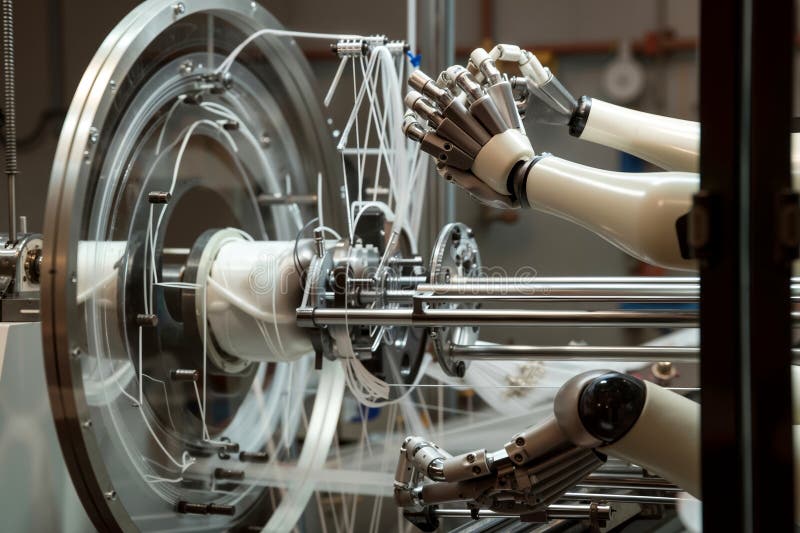
This architectural leap holds immense implications across industries. In advanced manufacturing, RCLA-powered robotics could autonomously manage complex assembly lines, diagnosing and rectifying errors without human intervention. For scientific research, it could accelerate discovery by independently designing and executing experiments, analyzing results, and formulating new hypotheses. The system’s inherent ability to learn and adapt from cumulative experience means its performance is not static but continually refined through ongoing operational data, offering unparalleled scalability and robustness.
While still in its nascent stages of deployment, the Recursive Cognitive Loop Architecture represents a pivotal step towards truly intelligent, autonomous systems. It shifts the focus from merely generating outputs to orchestrating complex actions, laying a robust technical foundation for the next generation of AI applications that can not only understand our world but actively shape it with unprecedented agency.


