
The Great Global Un-Shopping Spree: How Inflation Made Us All Accidental Artisans
Forget the roaring twenties; we’re living through the… *re-sewing* twenties. While economists drone on about interest rates and supply chains, a far more profound (and frankly, more entertaining) shift is underway in the global economy: the accidental rediscovery of repair. Yes, dear reader, the era of “out with the old, in with the slightly less broken” is upon us.
Once, a loose button meant a new shirt. A wobbly chair leg? Landfill fodder. A smartphone with a cracked screen? An upgrade, naturally. But with inflation stubbornly clinging on like a particularly tenacious barnacle, our wallets have declared war on planned obsolescence. Suddenly, the average household isn’t just budgeting for groceries; it’s budgeting for superglue, thread, and YouTube tutorials on fixing a leaky tap with nothing but a prayer and a spanner.
We’ve become a planet of reluctant DIYers. The sophisticated consumer, once a master of the disposable, is now a novice weaver, a hesitant plumber, and a surprisingly adept cobbler. Who knew that a global economic downturn would single-handedly boost the sales of sewing kits and teach a generation how to properly reattach a microwave handle?
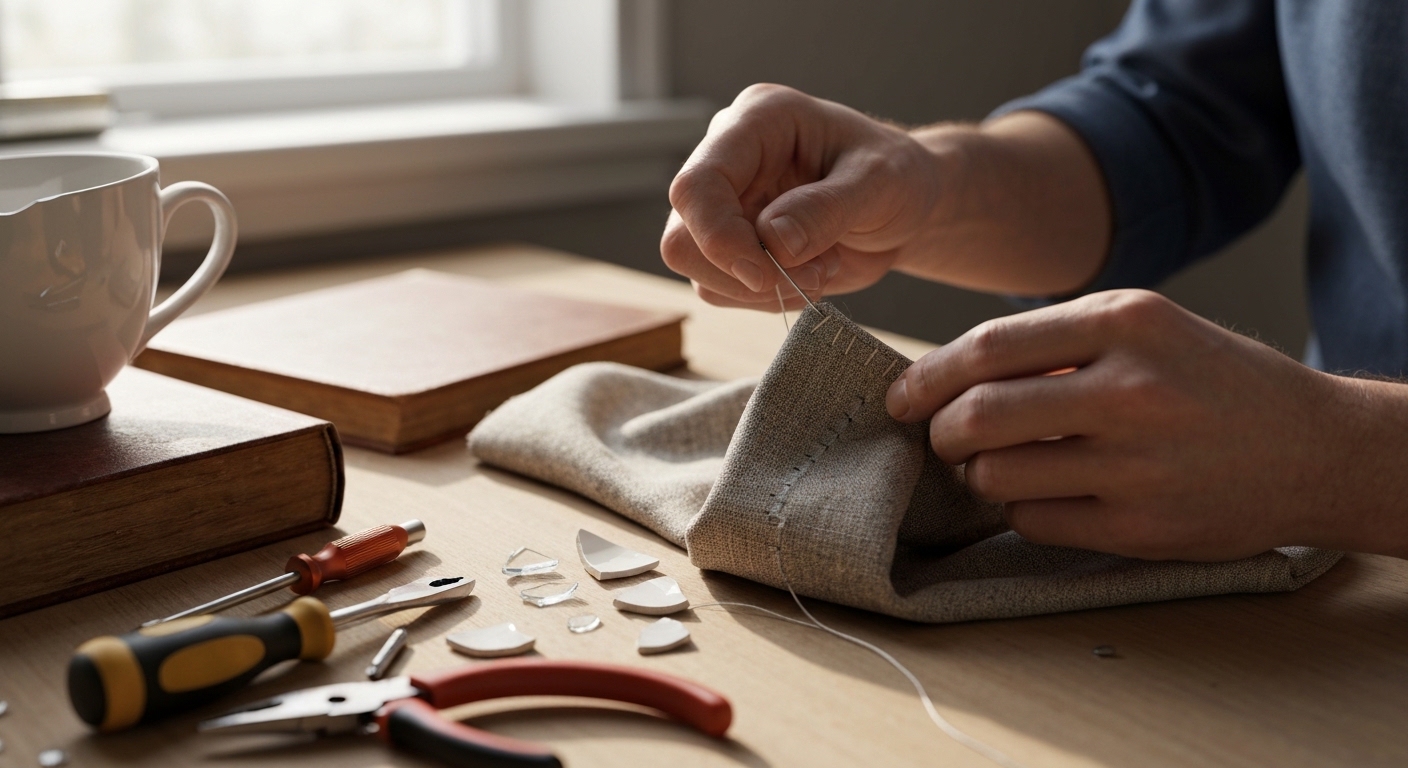
This isn’t just about saving a few quid; it’s a seismic cultural pivot. The shame of visible mends is vanishing, replaced by a quiet, defiant pride. “Oh, this old thing?” we now say, gesturing to a jumper patched with the artistic flair of a drunk cub scout, “Fixed it myself. Saves a fortune, you know.” The market for new-new-new is quietly ceding ground to the market for “just-about-functional-again.”
Even the tech giants, traditionally purveyors of shiny, irreplaceable gadgets, are starting to offer repair kits. It’s less a philanthropic gesture and more a reluctant nod to the undeniable truth: people simply aren’t replacing things as often. The global economy, it seems, is being driven not by insatiable desire, but by the nagging inconvenience of a broken toaster.
So, next time you see someone painstakingly re-stitching a ripped seam or wrestling with a wonky bookshelf, remember: they’re not just being thrifty. They’re part of the Great Global Un-Shopping Spree, an economic phenomenon born of necessity and nurtured by a collective, slightly exasperated groan. The future, it appears, is less about buying the next big thing, and more about desperately trying to keep the current thing from falling apart. And frankly, it’s hilarious.
(Pending Google AdSense Approval)


