
The Spatial Trap: When Your Living Room Becomes Your Career Ceiling
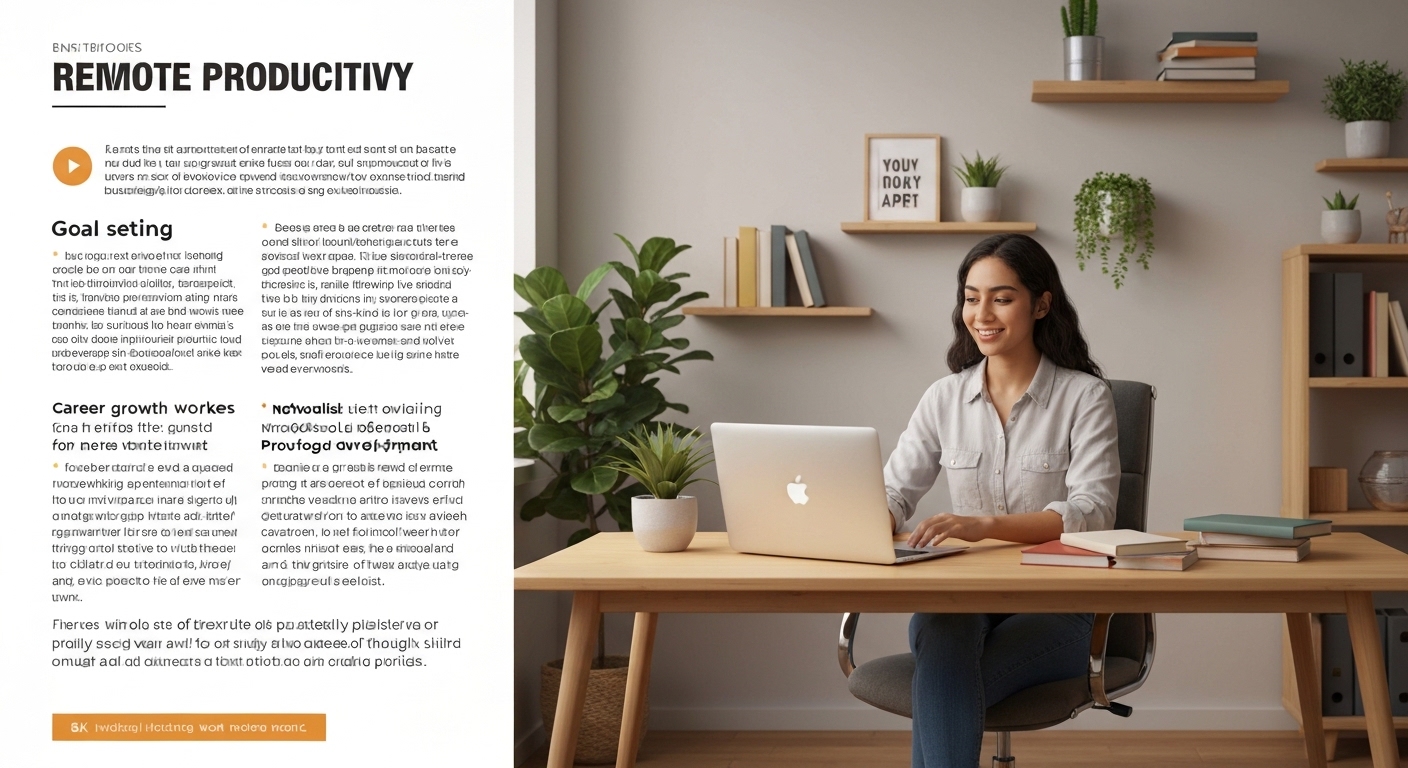
The remote work revolution promised liberation: no commutes, greater flexibility, a personalized workspace. But beyond the celebrated benefits and the documented hits to immediate productivity, a more insidious, spatially-driven entropy is at play. Maily Post’s investigation reveals a silent erosion of career ambition, stemming not from burnout, but from the very blurring of boundaries between ‘home’ and ‘office’ – a psychological entanglement that may be subtly anchoring professionals in place.
Historically, the journey to work, the office itself, even the commute back, constituted a “third space” – a distinct psychological and physical transition zone. It was where professional identity was donned, aspirations nurtured, and the strategic mental mapping for career ascent took place. Now, for millions, that ‘third space’ has collapsed. Your career path literally begins and ends where you brush your teeth, where you eat, where you sleep. This isn’t just about work-life balance; it’s about the very architecture of professional identity.

When your ‘office’ is a corner of your living room, or worse, your bedroom, the subconscious cues that once fueled professional growth begin to dissipate. There’s no separate realm to “enter” where ambition is the primary currency. The visual cues of a bustling office, the spontaneous mentorship of a walk to the water cooler, the physical ‘climb’ to a corner office – all are gone. Maily Post has uncovered anecdotal evidence from remote professionals who describe a creeping sense of stasis, a diminished impetus to ‘move up’ when “up” simply means a better Wi-Fi signal in the same unchanging four walls. The mental energy once reserved for career navigation now contends with household chores, children’s schedules, and the relentless familiarity of domestic space.
This isn’t to demonize comfort, but to question its long-term psychological cost for career trajectory. The sheer convenience of home-based work, while a boon for daily life, can become an invisible chain for professional aspiration. Why push for a demanding promotion, a relocate-worthy opportunity, or a leadership role requiring intense in-person collaboration, when the current setup perfectly supports a comfortable, albeit static, existence within one’s personal fortress? The risk of disrupting this established domestic equilibrium begins to outweigh the perceived benefits of career advancement.

The challenge, then, for both individuals and organizations, is to recognize this spatial trap. It demands actively re-creating boundaries, whether through dedicated “office” micro-spaces, deliberate ‘digital commutes,’ or company cultures that encourage professional distinction beyond the screen. Without a clear psychological and physical frontier for work, the very concept of “climbing the ladder” risks becoming an abstract, intangible notion, anchored firmly to the domestic ground.
(Pending Google AdSense Approval)


