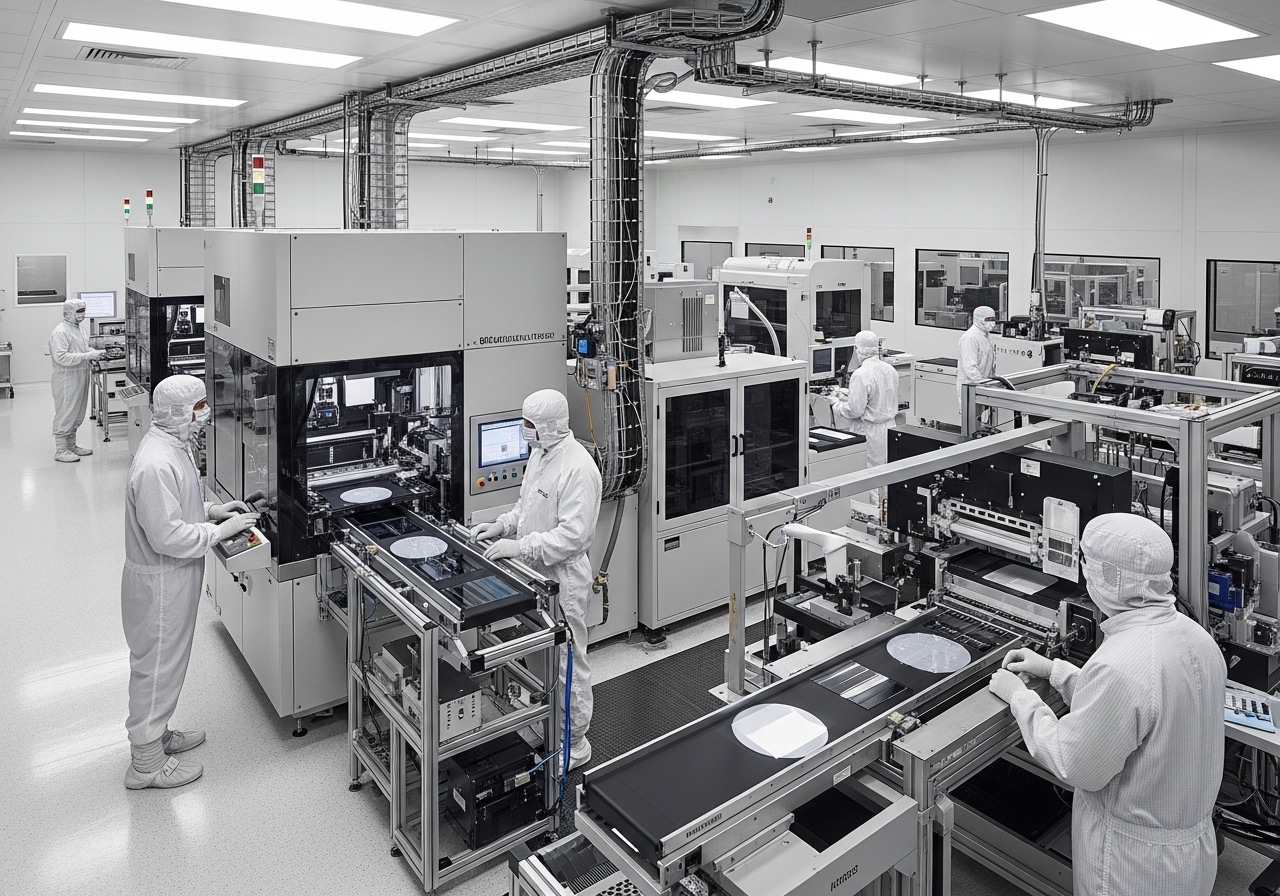
The Rise of a New Memory Giant
ChangXin Memory Technologies (CXMT), China’s premier DRAM manufacturer, is reportedly accelerating its plans for a massive initial public offering (IPO). With a target of raising approximately 6.5 trillion Korean won (nearly $4.8 billion), the company is positioning itself to challenge the long-standing dominance of the global ‘Big Three’: Samsung Electronics, SK Hynix, and Micron Technology.
This move is not merely a financial endeavor but a strategic cornerstone of Beijing’s broader ambition to achieve semiconductor self-sufficiency. As the world’s fourth-largest DRAM producer, CXMT’s influx of capital will likely be channeled into advanced fabrication equipment and research into next-generation memory architectures, including the highly coveted High Bandwidth Memory (HBM) sector.
Breaking the Oligopoly: Market Implications
For decades, the memory market has been defined by a tight-knit oligopoly. CXMT’s aggressive expansion threatens to disrupt this balance by introducing significant production capacity. Industry analysts suggest that while CXMT still trails in node miniaturization, its rapid scaling could lead to a price-competitive environment that pressures the margins of established leaders.
The timing of this IPO is particularly significant given the ongoing geopolitical tensions between the United States and China. By securing domestic funding and public listing status, CXMT aims to insulate itself from external supply chain shocks and export restrictions that have hampered other Chinese tech giants in the recent past.
Technological Hurdles and the Road Ahead
Despite the massive ‘war chest’ being assembled, the firm faces formidable technical barriers. Currently, the company is focusing on 10nm-class DRAM nodes, which are essential for modern smartphones and servers. However, bridging the gap to the EUV-based manufacturing processes used by its South Korean rivals remains a critical challenge for long-term competitiveness.
Furthermore, the global market is closely watching how the manufacturer navigates intellectual property landscapes. As the company scales, legal scrutiny regarding patent portfolios will likely intensify. Nevertheless, with the backing of state-affiliated funds and a captive domestic market, the company’s trajectory suggests a permanent shift in the global silicon map.
Conclusion: A Strategic Pivot for Global Tech
The anticipated IPO marks a pivotal moment in the 21st-century ‘chip war.’ As the company prepares to arm itself with billions in new capital, the global semiconductor industry must prepare for a more fragmented and competitive landscape. Whether this financial might can be translated into technological parity remains the defining question for the next decade of memory production.
작성자 소개