The Sudden Shift in the Artificial Intelligence Power Balance
The global artificial intelligence landscape is witnessing a significant structural shift following the release of Moonshot AI’s Kimi K3. This new model has not only challenged the technical supremacy of Western incumbents but has also triggered a notable recalibration in the private markets. Investors have begun to slash the estimated valuations of industry leaders, including OpenAI and Anthropic, by approximately 6% to 7%.
This sudden adjustment reflects a growing realization among venture capitalists that the ‘monopoly premium’ previously enjoyed by a few Silicon Valley firms may be evaporating. As high-performance models become more accessible globally, the scarcity value of any single large language model (LLM) is being called into question. The market is moving from a phase of speculative awe to one of competitive reality.
Memory Manufacturers Emerge as the True Strategic Winners
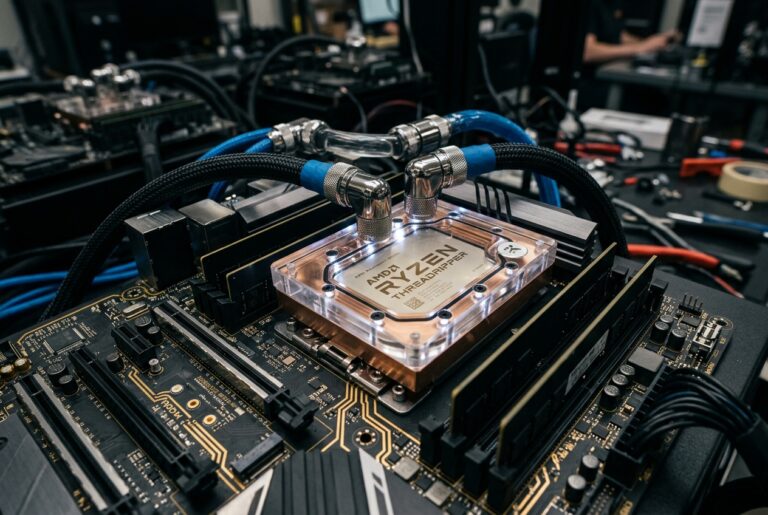
While the valuation of model developers faces downward pressure, the focus of the investment community is shifting toward the underlying hardware infrastructure. Interestingly, it is the memory manufacturers rather than the model creators who are emerging as the primary beneficiaries of this new era. The demand for High Bandwidth Memory (HBM) remains insatiable as diverse models like Kimi K3 require robust hardware to function at scale.
Analysts suggest that the ‘hardware bottleneck’ is moving from raw processing power to data throughput. This transition places companies specializing in advanced memory solutions in a unique position of strength. As more players enter the AI model space, the reliance on specialized semiconductor components becomes the only constant in a volatile market environment.
Questioning the GPU Monopoly and Model Exclusivity
For the past two years, the narrative has been dominated by the absolute necessity of high-end GPUs and the perceived invincibility of the first-movers in the LLM space. However, the efficiency demonstrated by newer models like Kimi K3 suggests that software optimization and architectural innovation might eventually reduce the dependency on massive, expensive hardware clusters.
- Increased Competition: Global challengers are closing the performance gap faster than anticipated.
- Valuation Correction: Investors are demanding clearer paths to profitability rather than just technical milestones.
- Diversification: The AI ecosystem is expanding beyond a few dominant nodes into a more distributed global network.
“The era of valuing AI companies based solely on the size of their parameters is ending. The market is now looking for cost-efficiency and localized utility,” noted a senior market analyst.
In conclusion, the ‘Kimi K3 effect’ serves as a wake-up call for the entire technology sector. As the barrier to entry for high-level AI performance lowers, the strategic value will likely migrate from the models themselves to the physical infrastructure and proprietary data that power them. The coming months will likely see further volatility as the market seeks a new equilibrium in the post-monopoly AI era.
작성자 소개