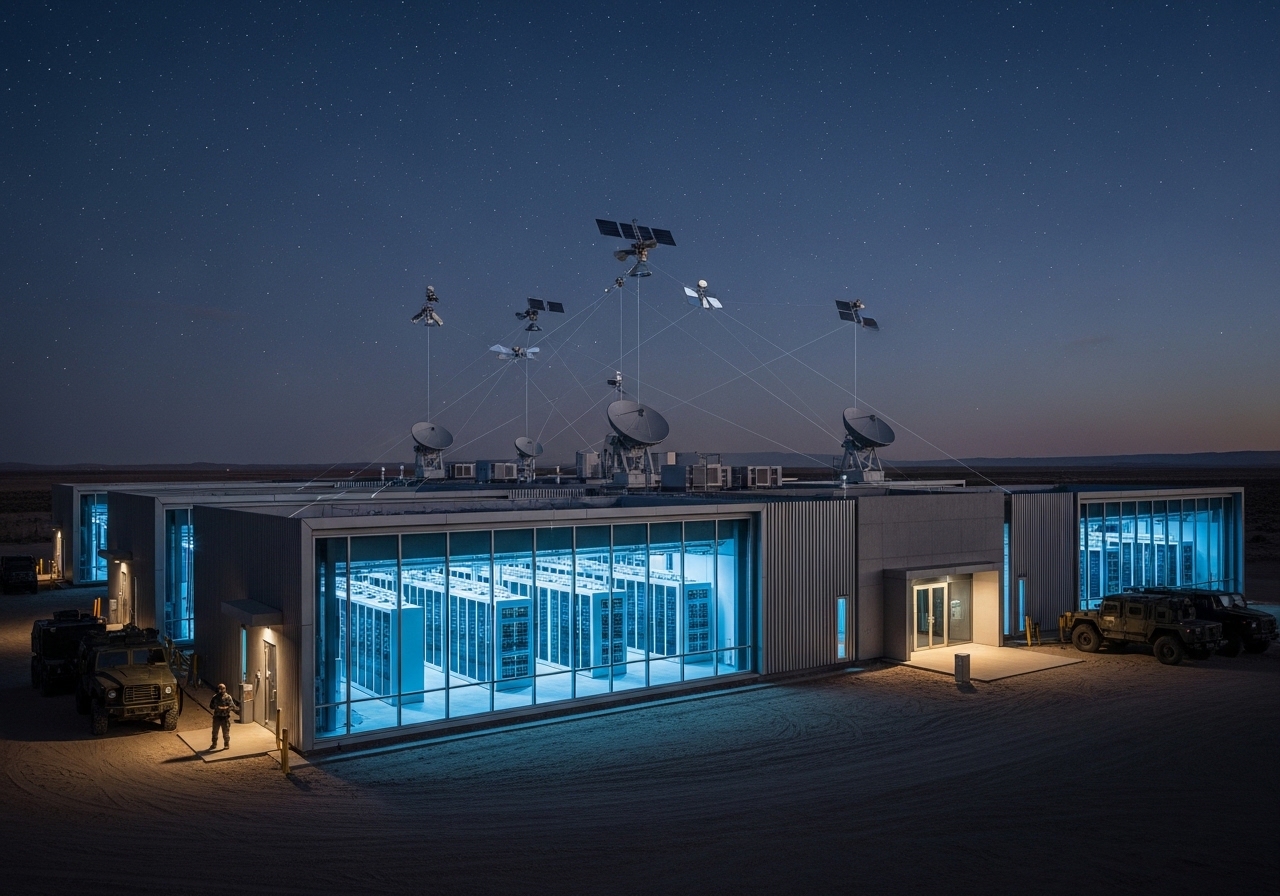
SpaceX is rapidly evolving from a commercial space exploration firm into a critical national security infrastructure provider for the United States. Recent reports indicate that the company is currently in high-level negotiations with the Department of Defense (DOD) to supply massive data center capacity specifically designed for artificial intelligence model training and deployment.
This multi-billion dollar initiative marks a strategic pivot for the company. While SpaceX is already a dominant force in satellite communications via Starlink and orbital delivery through Falcon 9, this new venture seeks to capture the computational foundation of modern warfare. The deal would see SpaceX providing the physical and digital architecture required to run complex AI algorithms for the Pentagon.
The core of the negotiation involves the provision of secure, high-density cloud environments. These facilities are intended to process the vast amounts of data generated by modern surveillance and reconnaissance assets, turning raw information into actionable intelligence through the power of machine learning.
By entering the cloud infrastructure market, SpaceX is positioning itself as a direct competitor to established tech giants like Amazon Web Services (AWS) and Microsoft. However, SpaceX offers a unique value proposition: the potential to integrate low-latency satellite connectivity directly with ground-based AI processing units, creating a seamless global data loop.
“The integration of space-based transit and localized AI compute represents the next frontier of military logistics,”
suggests a defense industry expert. This synergy allows for edge computing capabilities where data is processed closer to the battlefield, reducing the time-to-decision for commanders in high-stakes environments.
Furthermore, this expansion highlights the growing reliance of the U.S. military on private sector innovation. As the DOD seeks to modernize its aging infrastructure, the agility and technological vertical integration of SpaceX provide an attractive alternative to traditional defense contractors who have struggled to keep pace with the AI revolution.
Looking forward, the successful conclusion of these talks would solidify SpaceX’s role as a dual-use technology powerhouse. The company would no longer be viewed simply as a transportation service, but as the essential digital architect of the future American defense ecosystem, bridging the gap between Earth and orbit through the power of AI.
작성자 소개