The High-Stakes Diplomacy of AI Hardware
The global technology landscape is currently witnessing a fascinating intersection of informal diplomacy and hardcore industrial strategy. While the media often focuses on the social aspects of high-profile visits, the underlying reality is that the AI infrastructure race has entered a critical new phase. NVIDIA’s leadership is no longer just selling chips; they are architecting a global ecosystem that relies heavily on the specialized capabilities of Korean semiconductor giants.
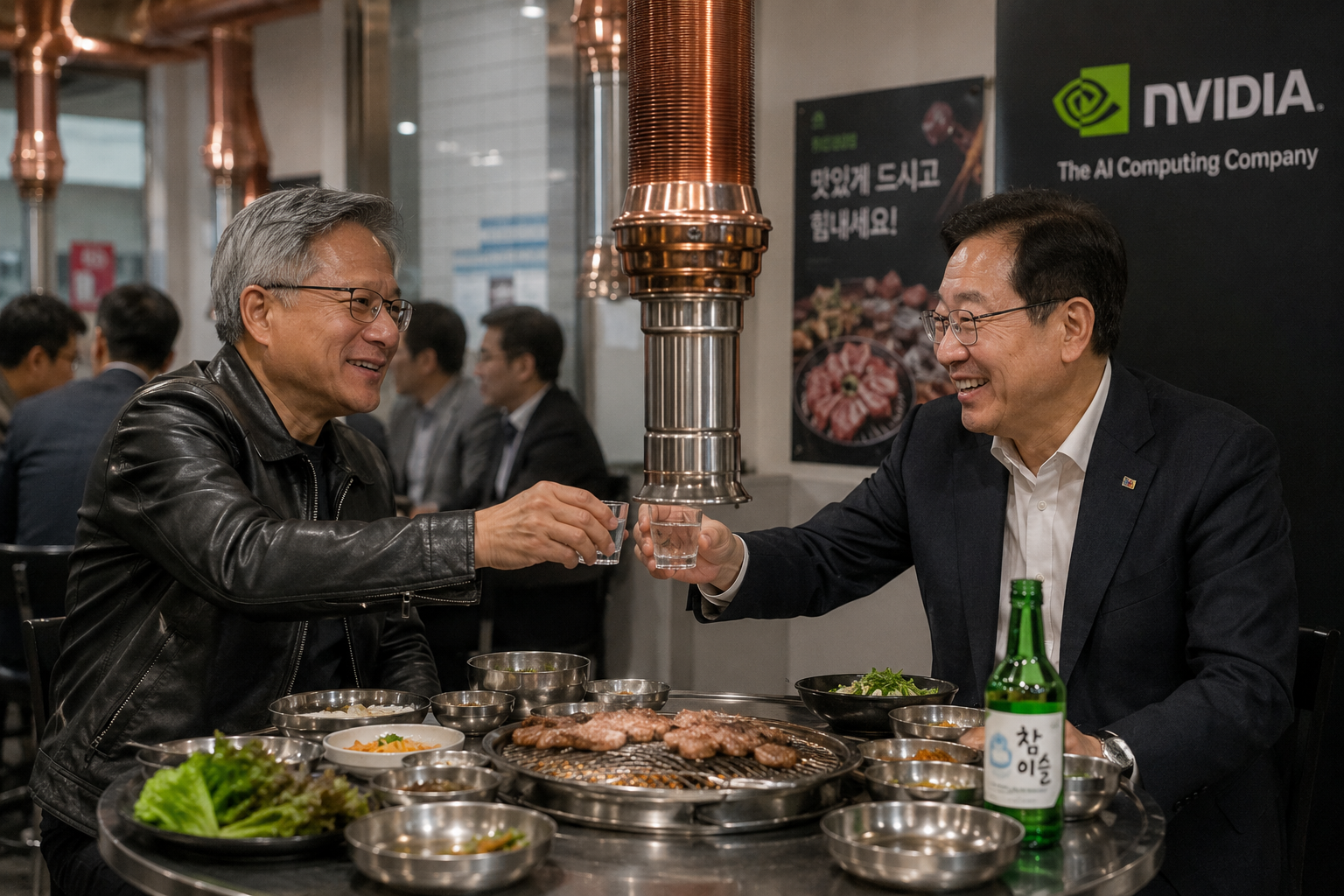
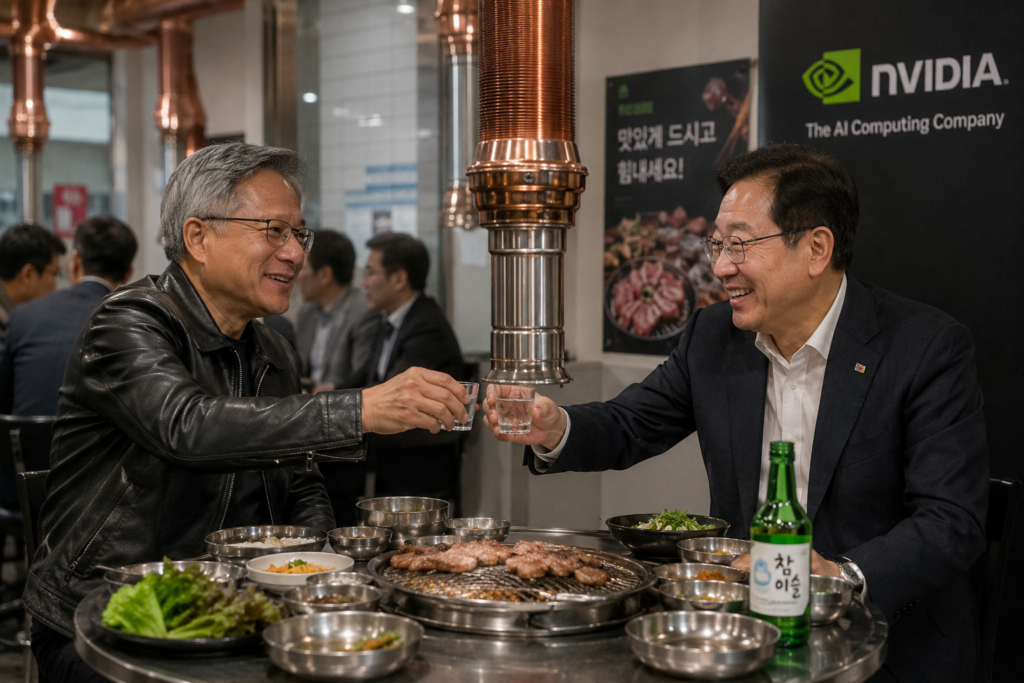
The so-called ‘Samgyeopsal diplomacy’ represents more than just a meal; it is a signal of trust and long-term commitment in a market where High Bandwidth Memory (HBM) has become the most valuable currency. This expert analysis explores the three strategic pillars driving this renewed focus on the Korean peninsula.
1. Securing the HBM Supply Chain Lifeline
As NVIDIA scales its production of Blackwell and future architectures, the primary bottleneck is no longer just logic processing, but the memory wall. The demand for HBM3E and HBM4 is far outstripping supply, making the top-tier memory manufacturers in Korea the ultimate kingmakers of the AI era.
- Diversification of Risk: By engaging deeply with both major Korean players, NVIDIA ensures a competitive bidding environment and reduces reliance on a single source.
- Technical Synergy: The integration of HBM with GPUs requires deep architectural co-design, necessitating these ‘face-to-face’ technical deep dives.
- Yield Optimization: Direct high-level communication helps in streamlining the rigorous qualification processes for new memory generations.
2. Countering the Global Foundry Bottleneck
While TSMC remains a primary partner, the sheer volume of the AI revolution requires a more elastic supply chain. Experts suggest that NVIDIA’s strengthening ties with Korean tech leaders may pave the way for a multi-foundry strategy that could stabilize global chip availability.
This ‘Kkanbu’ (close friend) relationship serves as a strategic hedge against geopolitical uncertainties. By fostering a robust partnership in Korea, NVIDIA gains access to cutting-edge packaging technologies and advanced manufacturing nodes that are essential for the next generation of AI accelerators.
3. Co-developing the AI-Native Future
The final pillar of this strategy is the shift from ‘vendor-buyer’ to ‘co-developers.’ The future of AI hardware is moving toward customized silicon and on-device AI, areas where Korean firms hold significant intellectual property and market share.
“In the age of generative AI, the distinction between hardware and software is blurring. Strategic alliances are the only way to maintain the pace of innovation required by the market.”
By aligning their roadmaps, these entities are essentially building a unified front against emerging competitors. This collaboration extends beyond chips into the realms of autonomous driving, robotics, and smart infrastructure, where the synergy between GPU logic and high-speed memory is most potent.
Conclusion: A New Era of Strategic Interdependence
The current maneuvers by NVIDIA’s leadership suggest that the future of AI will not be won by a single company, but by the most integrated alliance. The focus on Korea highlights the region’s irreplaceable role in the global AI value chain.
As we look forward, expect these ‘informal’ meetings to translate into formal, long-term supply agreements that will dictate the pace of AI evolution for the next decade. The AI Kkanbu is not just a catchphrase; it is the new blueprint for global tech dominance.
작성자 소개