The Quantum Leap: Why On-Device AI Optimization is the Prelude to a New Computational Era
The global semiconductor landscape is witnessing a seismic shift as artificial intelligence (AI) moves from centralized cloud servers directly into the heart of consumer hardware. While recent breakthroughs have demonstrated the ability of AI models to fully utilize the specialized architecture of advanced silicon chips, experts suggest this is merely the foundational stage of a much larger technological evolution.
Current developments focus on optimizing Large Language Models (LLMs) to run efficiently on unified memory architectures found in modern high-end processors. This transition not only enhances user privacy but also drastically reduces latency, creating a seamless interface between human intent and machine execution. However, the physical limits of traditional silicon are becoming increasingly apparent as model complexity scales.
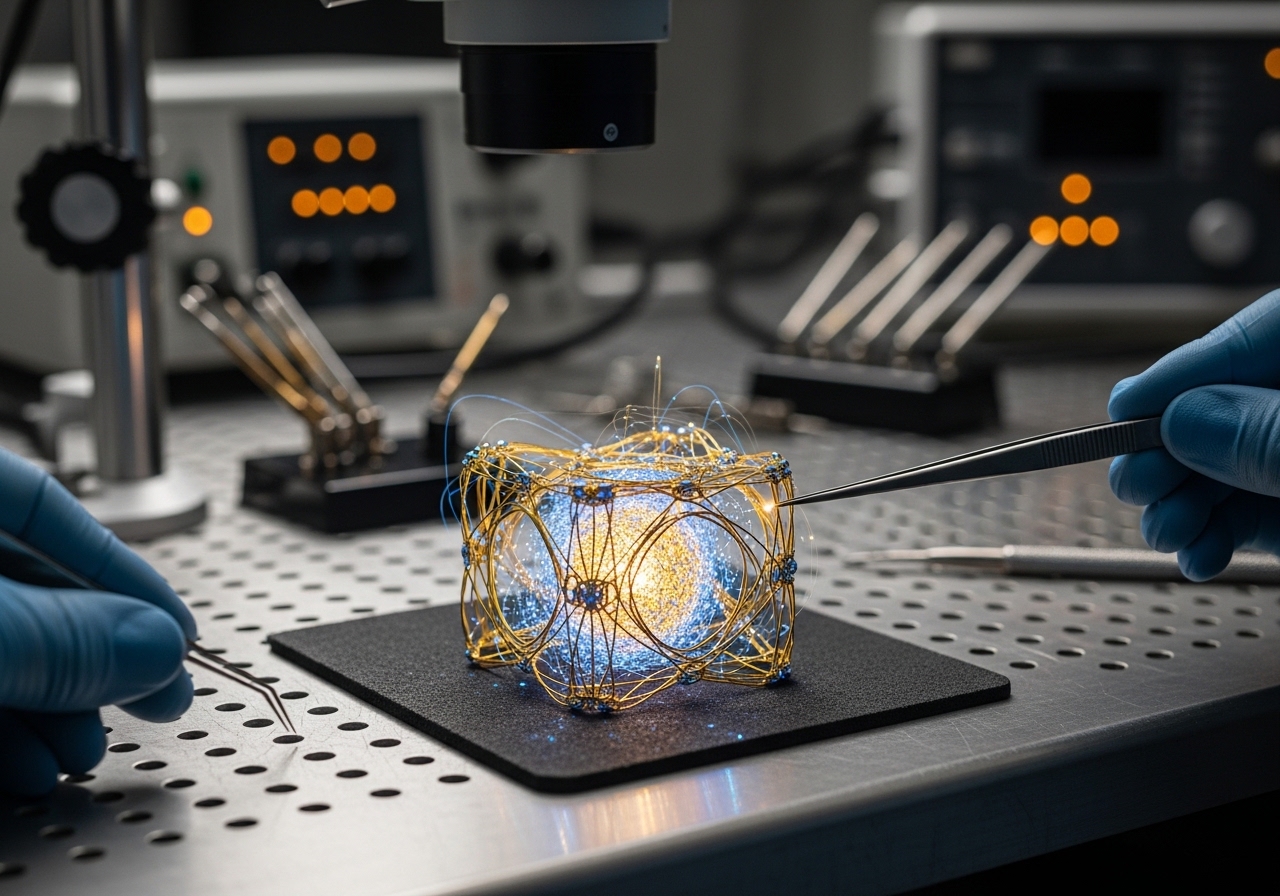
The true disruption lies in the impending convergence of Quantum Computing and AI. Unlike classical bits, quantum bits (qubits) can exist in multiple states simultaneously, allowing for the processing of vast datasets at speeds that were previously thought impossible. This synergy is expected to solve complex problems that currently stymie even the most powerful supercomputers.
The Synergy of Quantum Mechanics and Neural Networks
Industry analysts point out that the integration of quantum algorithms into AI training could lead to a paradigm shift in fields such as molecular modeling, financial forecasting, and complex cryptography. By leveraging quantum entanglement and superposition, AI can explore a near-infinite solution space, identifying patterns that classical silicon-based neural networks might overlook.
- Hyper-acceleration of Model Training: Reducing the time required for deep learning from months to minutes.
- Enhanced Generative Capabilities: Creating more nuanced and context-aware outputs through quantum-enhanced sampling.
- Energy Efficiency: Transitioning toward computational methods that require less power per operation than traditional transistors.
As we move forward, the focus will likely shift from standard hardware to Quantum-native systems. The current success in maximizing the potential of on-device silicon serves as a critical bridge, preparing the software ecosystem for the high-dimensional data processing capabilities that quantum hardware will eventually provide.
“The goal is no longer just making AI faster on existing chips; it is about reimagining the fundamental nature of computation to sustain the next century of innovation.”
Future Outlook: A Hybrid Computational Ecosystem
In the short term, we can expect a hybrid approach where classical silicon handles routine tasks while quantum processors are utilized for specialized, high-intensity calculations. This dual-track development ensures that the benefits of AI remain accessible to the general public while pushing the boundaries of scientific discovery.
Ultimately, the journey from optimized silicon to quantum-integrated AI represents a maturation of the digital age. Those who master the transition from the micro-scale of transistors to the atomic-scale of quantum mechanics will lead the next wave of global economic and technological dominance.
작성자 소개