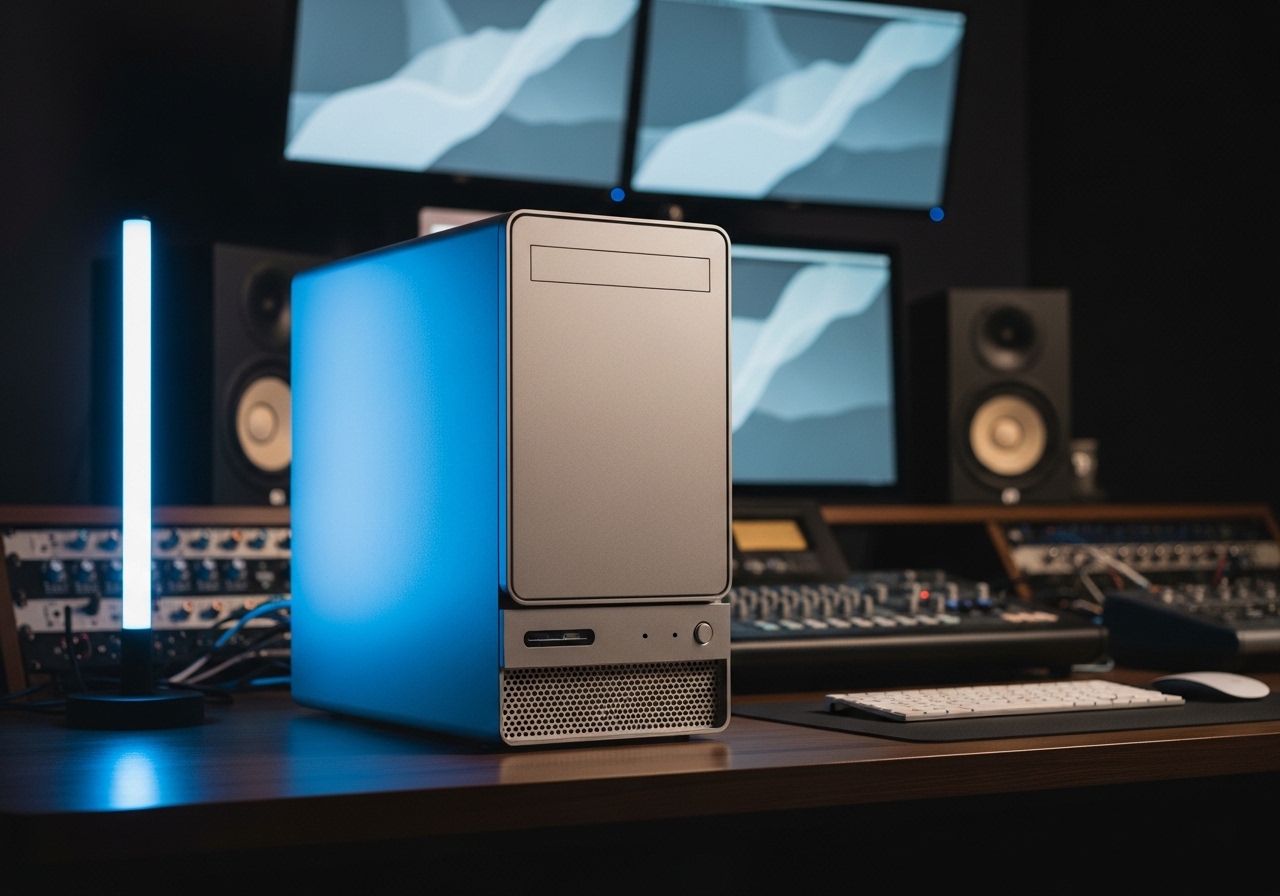
The landscape of high-performance computing is facing a significant shift as industry analysts suggest a prolonged update cycle for the premium professional desktop lineup. While mid-range silicon has begun its rollout across consumer-grade tablets and laptops, the high-end studio workstation appears to be on a different trajectory, with whispers pointing toward a massive leap directly to the M5 series.
The M4 Gap: A Strategic Omission?
Historically, major tech manufacturers have maintained a relatively steady cadence for their silicon transitions. However, current supply chain intelligence suggests that the professional desktop series may bypass the current M4 generation entirely. This move is not seen as a delay, but rather a strategic consolidation of resources to ensure the next professional desktop offers a generational leap in neural processing and thermal efficiency.
By skipping a generation, the manufacturer can align the professional workstation with the advanced 2-nanometer fabrication process rumored for the M5. This transition would provide a substantial boost in performance-per-watt, which is critical for compact desktop chassis. For professionals involved in 3D rendering and complex AI modeling, this jump could represent the most significant upgrade since the initial transition to proprietary silicon.
WWDC 2026: The Anticipated Reveal
All eyes are now turning toward WWDC 2026 as the likely stage for this hardware revolution. Major developers conferences are traditionally used to showcase high-end hardware that complements software ecosystems. A 2026 launch would allow the company to debut an Ultra-class chip, potentially featuring a modular architecture that further separates the professional line from consumer-grade mini desktops.
“The decision to wait for the M5 is about future-proofing. We are moving into an era where local AI processing demands hardware that doesn’t just iterate, but innovates,” says a leading industry hardware consultant.
- Advanced Ray Tracing: Next-gen GPU cores optimized for real-time lighting and shadows.
- Unified Memory Expansion: Potential for much higher ceilings to accommodate large language model (LLM) training.
- Refined Thermal Management: Innovative cooling systems designed to handle the increased density of the M5 Ultra architecture.
The Dilemma: To Buy or To Wait?
For users currently operating on first or second-generation high-end silicon, the incentive to wait for 2026 is remarkably high. The M5 professional workstation is expected to offer a transformative experience that justifies the two-year wait. However, those still using legacy Intel-based systems or those facing immediate workflow bottlenecks may find the current M2 Ultra models more than sufficient for today’s tasks.
In conclusion, the roadmap for the professional desktop suggests a period of calculated patience. While the lack of an immediate update may be frustrating for some, the technical specifications of the M5 era promise to redefine the boundaries of what a compact workstation can achieve. The 2026 horizon looks bright for those who demand the absolute pinnacle of desktop performance.
작성자 소개